Remote Sensing and 3D Modeling Tools: Digital Twins for Documenting and Preserving History Recording
  • This purchase is for two-month access to a past online seminar recording, not a registration for a live event.
  • You will receive an email from SAA staff with a link to view the recording.
  • Group registrations allow for an unlimited number of participants in your group.
  • Please allow one business day to complete this transaction.


Presenter(s) Presenter(s)

Sergio Bernardes, PhD, Center for Geospatial Research, University of Georgia

Sergio Bernardes is the Associate Director for the Center for Geospatial Research and an Adjunct Associate Professor at the University of Georgia. He holds a PhD in Geography, a MS in Remote Sensing and a BS in Agriculture Engineering. Since 1989, Dr. Bernardes has worked at the forefront of geospatial applications and software development, with expertise spanning geography, software engineering, and the implementation of large-scale geospatial projects for government, industry, and academia. An FAA-certified remote pilot, he has been pioneering the use of unmanned aerial systems (UAS) for remote sensing since 2013. He contributes to digital humanities and cultural heritage preservation through digital documentation, 3D reconstruction, and visualization of sites and objects of historical significance.

Course Description Course Description

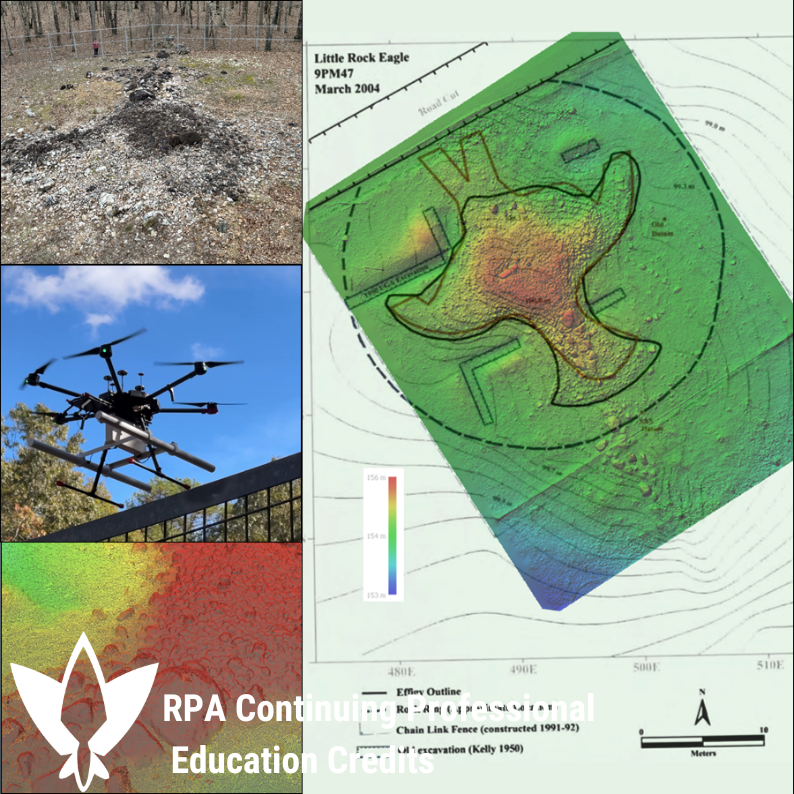
Discover how cutting-edge technologies including drones, photogrammetry, and remote sensing are revolutionizing historical preservation in this two-hour seminar. In the first hour, you’ll learn about the principles of photogrammetry, common workflows for 3D reconstruction, and explore case studies showcasing how these techniques are used to create detailed digital twins of artifacts and historic sites. The second hour provides a hands-on demonstration where attendees will follow and learn the step-by-step process of building 3D models, from image organization to dense point cloud generation, mesh creation, and exporting final models. Whether you're a preservationist, archaeologist, or technology enthusiast, this seminar offers both foundational knowledge and practical skills to document and visualize history.

Course Objectives Course Objectives
  1. Learn how photogrammetry and remote sensing technologies can enhance archaeological work.
  2. Apply photogrammetry techniques to archaeological contexts.
  3. Create 3D models and point clouds for archaeological analysis.

Sign In

Archaeologists Share What they Do

The Archiving the Archaeologists series is an oral history project of video interviews of archaeologists near retirement or already retired. Listen to real archaeologists reflect on their careers, how and why they became archaeologists, and their contributions to the discipline on the SAA YouTube channel.

Is the Past in Your Future?

Aimed at high school students, the Is the Past in Your Future?  [PDF 1.1 MB] brochure from the SAA provides brief information about a career in archaeology.

The National Historic Preservation Act

The National Historic Preservation Act (NHPA) of 1966 is a federal law that protects archaeological resources in the United States. The What is the NPHA? [PDF 1.3 MB] fact-sheet from SAA helps explain the NHPA. It includes common misconceptions about the law and explains the Section 106 review process, which is particularly important to historic preservation.

Be an Archaeology Education Coordinator

If you are an SAA member interested in serving as your area's Archaeology Education Coordinator, please contact [email protected].

SAA Education and Outreach Awards

SAA gives out several archaeology education and outreach-related awards each year: the Distinguished Achievement in Public Archaeology Award, the Excellence in Public Archaeology Programming Award, the Outstanding Public Archaeology Initiative Award, the Binford Family Award for Teaching Scientific Reasoning in Archaeology, the Robert S. Peabody Institute of Archaeology Award for Archaeology And Education. Learn more about these awards, nominate a worthy individual or project, and view the past honorees!


Archaeology Education Newsletter Archive
1990-Present

SAA's archaeology education newsletter started as the Public Education Committee's print newsletter Archaeology & Public Education (A&PE). Running from 1990 to 1998, it featured news, events, and K-12 lesson plans aimed at expanding awareness of archaeology and heritage issues. It switched to a web format from 2000 to 2004. After a hiatus, it returned as Public Archaeology Notes (PAN) in 2016, managed by SAA's Archaeology Education Coordinators as a way to share news across regions.

Educational Videos

Looking for video content for your classroom? The SAA YouTube channel has short informational videos on a wide variety of topics, long-form interviews with archaeologists, and publicly-available online seminars.

State Archaeology Celebration Poster Contest

Does your state have an annual archaeology celebration? Submit a poster to the SAA State Archaeology Celebration Poster Contest! Learn more about the award and the submissions process.

SAA Committee on Repatriation

The Committee on Repatriation tracks national legislation, testifies at hearings when necessary, and represents SAA in discussions and negotiations on repatriation issues.

JOIN TODAY!

Join to lend your voice and your numbers to our efforts to ensure the archaeological record will exist for future generations.


Race, Inequality, and Decolonization

Please visit a selection of items on topics of race, inequality, and decolonization from The SAA Archaeological Record, Advances in Archaeological Practice, American Antiquity, and Latin American Antiquity.


Online Learning Archive

SAA members, log into the Member Center to access 30+ hours of free continuing education recordings. This is an exclusive member benefit.

Publicly-Available Recordings

Everyone can enjoy and learn from these events. See SAA's Continuing Education playlist on YouTube for publicly-available recordings of past lectures.

Have a Request?

The seminars we offer on-demand will change over time. If there is a past online seminar recording you'd like to view, please let us know at [email protected]. We can't guarantee that we can meet your request, but your input will help us make decisions about what to offer next.

Download the SAA Principles of Archaeological Ethics

In 1996, the SAA Executive Board adopted its Principles of Archaeological Ethics, and in 2016, membership voted to add a Principle No. 9. In 2018, the SAA Board created a series of task forces which culminated in a 2024 update to the Principles, which were adopted overwhelmingly by members on the January 2024 ballot. Download the most current SAA Principles of Archaeological Ethics [PDF 183 KB] to print or use for classrooms or training.